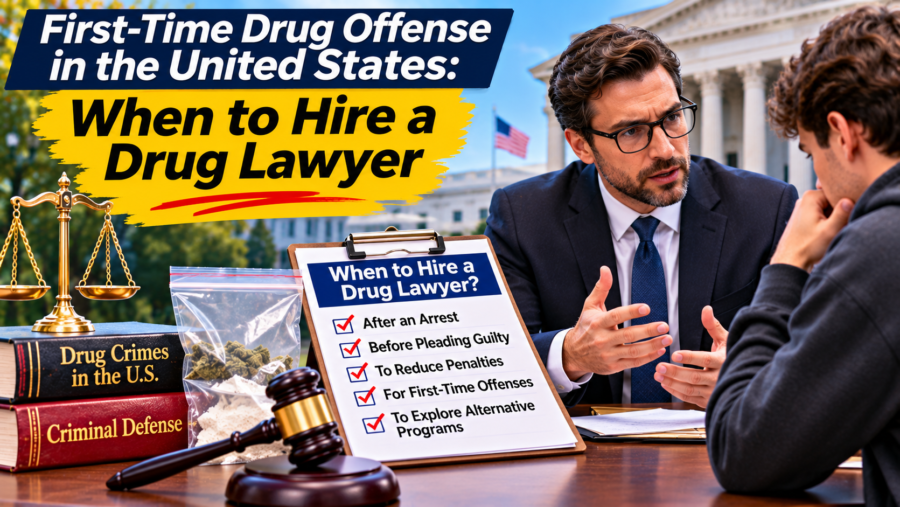
Your first drug charge might be scary. Of thoughts of jail, fines, your career, and your future might be frightening. A small drug crime might get you into major legal difficulties. Since it’s your first arrest, you won’t necessarily get the harshest sentence. It is contingent upon your charge, your criminal history, and the details of your case. Your actions following an arrest can potentially impact your case. So when should you engage a drug attorney? The short answer: As soon as possible. Getting an attorney on your side as you begin helps preserve your rights and ensure that you know what your options are.
Will a First Drug Offense Be a Big Deal?
Absolutely. In fact, you can be fined, put on probation, or sent to jail for a first drug conviction. The penalty depends on the substance, the amount, the charge, and the laws of the state. In the United States, drug accusations are often classified into one of three categories:
- Possession: Possession of an illicit drug.
- Intent to distribute: Possession with plans to distribute. Drugs to be distributed or sold.
- Distribution of a controlled substance: Illegal transportation, sale, and/or distribution of drugs.
Punishment can be found both under federal and state law. Some instances are in circuit court and others are under federal law. For example, under federal law, a first offense of simple possession might result in a year in jail and a fine. Other drug charges entail far heavier sentences. But the first-time arrest is still risky. Early legal guidance can avert costly blunders.
When to Hire a Drug Lawyer?
Ideally, you should contact a drug lawyer as soon as you are arrested or become aware of an inquiry against you. You don’t need to wait until charges are filed by the police. Having a lawyer might help you learn your rights earlier. Signs you need legal help:
- The police nabbed you for narcotics possession.
- The police find drugs in your home or vehicle.
- You are being sought by investigators for questioning.
- You’re being charged with or told to go to court.
- You worked with police to sell or distribute drugs.
- You can be charged with drug crimes by the state or federal government.
You may be arrested by the police, but even if they release you, your case may not be over. A lawyer can explain what will happen next.
What Can A Drug Lawyer Do For A First Offense?
Your drug lawyer can study the facts and look for strategies to counter the case. The goal is to safeguard your rights and to achieve the best possible outcome within the law.
1. Evaluation of police search
The Fourth Amendment protects you against unwarranted searches and seizures. The police must have a good reason, according to the law, to search your automobile, your home, or your things. A lawyer considers whether the police obeyed those rules. If the search was unlawful, the defense may request the judge to suppress the evidence.
2. Fighting a Drug Possession Charge
Just because narcotics are found near you doesn’t mean the drugs were yours. This may be a case of cops finding narcotics in an apartment or car that you share with others. Your attorney can fight any claims you knew about or controlled the medicines.
3. Reviewing Lab reports
Police can send the things they have confiscated to the lab for testing. The results may assist determine what the chemical was and the quantity discovered. A lawyer may be able to study lab reports and test records. Any mistake can serve as a basis for a challenge to the evidence in the defense.
4. Criminal Charges in Arizona
The lawyer determines if there is enough evidence to support the charge. Sometimes the evidence may justify a minor charge.
5. Plea Bargaining With the Court
Your attorney can negotiate with prosecutors and evaluate any plea bargain. There are pros and cons to this, so you should carefully consider whether or not you want to choose this option.
Is Jail Time Avoided for First-Time Drug Offenses?
Alternatives to incarceration may be available for some first-time offenders. This includes options like diversion, drug treatment, probation, and other court programs. You may be eligible, depending on the charge and the laws in your area. Type of drug, prior record, and details of the case may come into consideration. Some courts provide drug-specific programs for drug-problem people. These programs may consist of drug tests, counseling, classes, and/or court appearances. The person may have a better case outcome if he or she complies with the terms. Some programs even allow for dismissal, if the law permits it. However, not everyone will be eligible. A drug lawyer can go over the regulations and tell you what options you may have.
After Your First Drug Arrest: What To Do?
Your conduct following your arrest could damage your defense. Remain calm and do not do anything that may damage your case. Simply do the following:
- Exercise your right to keep silent if you’re questioned by the police.
- Demand to speak with an attorney prior to answering questions about the case.
- Avoid posting about your arrest on social media.
- Save court documents, police notices, or case files.
- Go to all court dates unless the judge says you do not have to come.
- Be honest with your lawyer about what transpired.
Do not tamper with evidence or ask someone to alter their account. Being honest with your attorney will construct a strong defense.
So Why Platinum Criminal Defense Law Firm?
The First drug offense might destroy your future. You will want an attorney familiar with defending criminal charges and taking cases to trial. David Benowitz at Platinum Criminal Defense Law Firm is accustomed to battling criminal allegations. He is dedicated to high-quality client service at economical rates. Mr. Benowitz has an AV rating from Martindale-Hubbell. He also has a 10 rating on AVVO. He is a member of the National College of DUI Defense as well. He serves on the faculty of the Trial Advocacy Workshop at Harvard Law School. His specialty is on trial and criminal defense work. An expert Criminal Defense Attorney can evaluate your case and discuss your legal options with you. If this is your first time facing a drug charge, getting help early can make all the difference in the world.
Frequently Asked Questions (FAQs)
- Do I need a lawyer for a first drug offense?
Short answer: Yes, you should hire a drug lawyer to preserve your rights.
Detailed answer: Even just one drug offense might lead to severe consequences. A lawyer can examine evidence, contest police misconduct, and provide you a broad picture of defenses available to you. Seeking legal guidance early can also save you from making mistakes.
- Can a first-time drug charge be dismissed?
Short answer: Yes, some first-time drug offenses can be dismissed.
Detailed answer: A case might be dismissed for poor evidence or cops breaking the law. Some may also qualify for treatment or diversion. That will depend on the charge and the local law.
- Do you go to jail for drug possession for the first time?
Short answer: Not necessarily. Some first offenders may be given an alternative to incarceration.
Detailed answer: A court may see probation, diversion, or therapy, according to the legislation. The results may depend on the substance, the amount, and the circumstances of the case. An attorney can assist you with understanding what the dangers are in your situation.
- Will a first drug charge impact my future?
Short answer: Yes, a drug conviction may affect future jobs, housing, etc.
Detailed answer: Some employers and landlords do background checks. And drug offenses might also keep you from obtaining a license or entering school programs. A lawyer may be able to tell you if you qualify for record sealing or other remedy.
- When should I get a drug defense attorney?
Short answer: If you have notice of any arrest or drug inquiry, you should contact an attorney immediately.
Detailed answer: Getting legal help early lets your attorney analyze police reports and collect relevant evidence. Your lawyer can also assist you with questioning, court dates, and plea offers.